
Practical relocation guide
7 Tokyo Areas to Consider for Your Relocation
Compare seven well-connected Tokyo-area neighborhoods by commute, housing character, services, and the tradeoffs that matter before signing a lease.
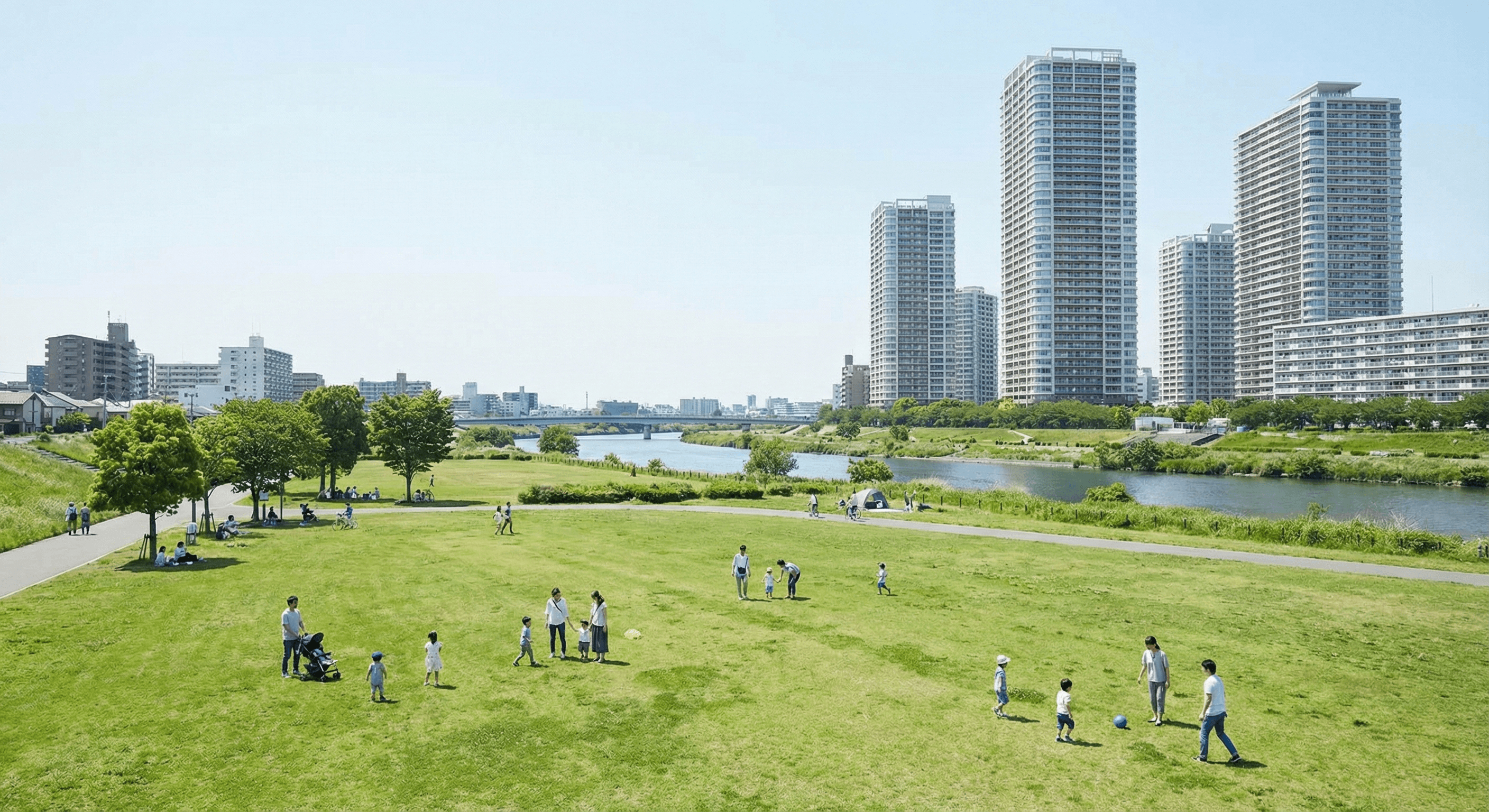
Tokyo does not have one universally “best” neighborhood for international residents. The useful question is which area makes your recurring trips, housing budget, and daily routines easier.
Use these seven areas as a shortlist, not a ranking. Train schedules, asking rents, services, and construction change; verify the route at your actual commuting time and compare current listings before making a decision. For the broader framework beyond Tokyo, read how to choose a Japanese suburb.
Start With the Destination, Not the Neighborhood Name
Write down the station you expect to visit most often—an office, school, family home, or client area. Compare routes with the time and day you will really travel. A direct local train can be more dependable than a theoretically faster route with difficult transfers.
For each candidate, check:
- The door-to-door trip, including the walk and transfer distance.
- Peak and late-night service, not only a midday estimate.
- Current listings at the floor area and building age you need.
- Groceries, clinics, childcare, parks, and quiet streets within your walking radius.
- Municipal flood, landslide, and earthquake-risk information for the exact address.
- The building's construction, management, evacuation route, and insurance requirements.
The Tokyo Metro route and station guide is a useful primary source for subway connections and facilities. JR, Tokyu, Odakyu, and Keio should be checked on their own current route tools.
1. Kichijoji: Parks and a Major Station District
Kichijoji sits in Musashino City west of the 23 special wards. It combines JR Chuo Line and Keio Inokashira Line access with a substantial shopping district and Inokashira Park.
Consider it when: you want a large station area with daily services, park access, and more than one useful rail route.
Check carefully: current asking rent near the station, the difference between rapid and local services, platform conditions during your commute, and the walking route to the property. Popularity does not make every listing good value.
2. Shimokitazawa: Low-Rise Streets and Entertainment
Shimokitazawa is in Setagaya Ward, with Odakyu and Keio Inokashira Line service. Its shops, music venues, restaurants, and compact streets make it active well beyond commuting hours.
Consider it when: evening activity, a low-rise streetscape, and access toward Shibuya or Shinjuku fit your routine.
Check carefully: street noise, building access, unit size, construction nearby, and whether the lively parts of the area help or hinder your daily life.
3. Futako-Tamagawa: River Access and Newer Development
Futako-Tamagawa is also in Setagaya Ward, on the Tokyu Den-en-toshi and Oimachi Lines near the Tama River. The station area includes large retail and newer residential development.
Consider it when: river access, shopping convenience, and family-oriented facilities are priorities.
Check carefully: peak conditions on the route you need, the walk from the station, total cost in newer buildings, and the official flood-hazard information for a specific address.
4. Musashikosugi: Broad Rail Connectivity
Musashikosugi is in Kawasaki rather than Tokyo, but it is commonly compared with Tokyo neighborhoods because several JR and Tokyu routes meet there. Housing near the station includes many high-rise buildings.
Consider it when: members of the household need access in different directions, including Tokyo and Yokohama.
Check carefully: which platform serves your route, transfer walking time, tower management fees, elevator capacity, backup power, and municipal flood maps. Station proximity alone does not describe the full trip.
5. Nakano: Close-In Convenience and Varied Housing
Nakano is west of Shinjuku with JR Chuo and Chuo-Sobu service plus Tokyo Metro Tozai connections. Its housing stock ranges from older wooden buildings to newer apartment blocks.
Consider it when: close-in rail access and a dense station district matter more than large floor area.
Check carefully: structure and sound transmission, insulation, redevelopment around the station, bicycle parking, and whether the relevant train service stops when you need it.
6. Jiyugaoka: Compact Shopping and Residential Streets
Jiyugaoka is served by the Tokyu Toyoko and Oimachi Lines. Boutiques and restaurants cluster around the station, with quieter residential streets farther out.
Consider it when: access along Tokyu routes and a walkable commercial center fit your commute and budget.
Check carefully: current price per square meter, hills and walking distance, weekend activity, grocery options you will actually use, and transfer requirements beyond the Tokyu network.
7. Ogikubo: Two Different Routes Toward Central Tokyo
Ogikubo in Suginami Ward has JR Chuo Line service and is the western terminal of the Tokyo Metro Marunouchi Line. Tokyo Metro's official Ogikubo station page lists the line, transfers, exits, and accessibility facilities.
Consider it when: having both JR and a subway route gives you useful alternatives for recurring trips.
Check carefully: whether the JR or Marunouchi route is better for your destination, the actual departure you would use, construction type, and the difference between the north and south sides of the station.
A Practical Area Comparison
Use the table to decide what to investigate, not to crown a winner.
| Area | Main connections | Housing character to investigate | Check before applying |
|---|---|---|---|
| Kichijoji | JR Chuo / Keio Inokashira | Mixed-use station area near a major park | Current rent and your Chuo or Inokashira trip |
| Shimokitazawa | Odakyu / Keio Inokashira | Low-rise, active, entertainment-oriented | Noise, construction, and unit size |
| Futako-Tamagawa | Tokyu Den-en-toshi / Oimachi | Newer development near the Tama River | Peak travel and official flood maps |
| Musashikosugi | JR / Tokyu | High-rise hub with broad rail access | Transfer distance, building systems, and flood maps |
| Nakano | JR Chuo / Chuo-Sobu / Tokyo Metro Tozai | Dense and varied building stock | Structure, noise, and redevelopment |
| Jiyugaoka | Tokyu Toyoko / Oimachi | Low-rise commercial and residential streets | Total housing cost and walking route |
| Ogikubo | JR Chuo / Tokyo Metro Marunouchi | Established residential area around a route terminal | Which route works for the exact destination |
View the Apartment and the Route
Shortlist current listings, then repeat the trip during the hours you expect to travel. Walk from platform to property. Look for lighting, hills, crossing delays, noise, groceries, and anything that would matter with luggage, children, limited mobility, or bad weather.
For risk checks, start with the municipality for the exact address. The Tokyo Metropolitan Government explains why ward and city hazard maps should be checked for flood, landslide, and other local risks.
Before comparing listings, read the Japanese apartment layout guide. Then add the viewing, application, and move-in tasks to the moving checklist.